I’ve shared a part of my story before, but in light of this year’s World Mental Health Day theme of mental health in the workplace, I thought I would share my workplace story. What I’ve learnt about mental health in the workplace is that you have to know your rights, fight for them, and for yourself, so that you are able to thrive because you deserve it.
A couple of years ago, I found myself in a situation where I was on maternity leave with my son, and we had found out that he had 2 holes in his heart, and then roughly 3 months after that I was retrenched. It was during all of these challenges, that I found my psychologist, and I went to her because you know, retrenchment and health of your children can stress a person out. (I mean, meanwhile, what was actually going on was decades of untreated trauma)
I eventually started a new job, and after a year of being in the job (and in therapy), I was struggling to stay on top of my work, because what I learnt about myself in therapy, was about how my other life difficulties were impacting my “at work” self, and making it hard for me to focus on succeeding at work (a residual effect of the retrenchment and child health stuff). Which tends to happen with mental health conditions – is that they are not isolated. It’s not like, “Cool, you will only be depressed, at home, on a Tuesday, Wednesday and Thursday”. No, it’s all the time, and in every sphere of life. So if you cannot get your homelife timetable together, because you are too depressed to care about anything, how would you get your work life timetable together?
My manager knew I was in treatment for Anxiety and Depression, and he was very understanding and gave me the flexibility to go to therapy during the day, and was very understanding when I needed time off.
Eventually, though, my lack of performance at work led to me being disciplined, and at the same time, my psychologist recommended that I be admitted to a clinic, because I was not mentally healthy, and needed some more serious, everyday mental health care.
When I returned to work, my manager tried to take me off the performance improvement plan, because he figured that clearly not all is right in Whoville if I am being admitted. But the problem is. The business was not as understanding. His manager, who would be managing me, once he left the company, felt that my mental health issues and me not performing a work were unrelated. And the fact that I was now back at work, and no longer in a clinic meant that I was fit for work, so therefore, still had to “stand trial” for everything that happened during my depressive episode, prior to the clinic stay. Because you know, it’s isolated.
While at the clinic, I was diagnosed with ADHD, and that also explained my lack of meeting deadlines and challenges with prioritising etc, and I tried to sit with this new manager and explain to her, that I didn’t know I was fighting a battle last year, and now I know what I’m working with. And she was like cool, we’ll incorporate that into your performance improvement plan. Not, ooooh, I see, let’s take you off the PIP, and see if your performance improves and if not, then put you back on the PIP. In her mind, people underperform, and therefore, they have to suffer the consequences, regardless of the reasons for underperformance.
And that is the biggest challenge to employers, is to know that it’s not about ignoring failings, because yes, employees are paid to do their jobs. But what is required, is just a little bit of understanding. Because in my situation, all I needed was for a manager to go, let’s try and see how you do now that you have received some mental health help, and know that you have ADHD. And if I continued to underperform, I would have accepted the consequences, but I wasn’t given an opportunity to show my true potential, my true self, my accommodated self. I was rated against my struggling self, and forced to meet up to the standards of everyone who wasn’t struggling.
I managed to find help in the business through our mental health ambassador who helped me to have the right conversations with my managers about reasonable accommodations and to help them understand how my anxiety and depression showed up at work, and what supports I needed. And what I learnt from this experience was to always stand up for yourself and your rights, even when everyone around you is fighting against you.
Since being diagnosed with anxiety and depression, I have become aware of the symptoms… at least I thought I was. I’m very much still on my healing journey, and sometimes, need someone outside of myself to tell me that my “check engine” light is on.
Things were happening in my life, that irritated me, and made me sad, and annoyed. But I thought that it was just that. A normal reaction to life sucking. A side effect of adulting.
Until my psychologist told me to make a call to my psychiatrist. And it switched on a light for me, highlighting to me that my “check engine” light was on… and flashing aggressively. And I was ignoring it, and continuing to drive far into the distance without stopping. My psychologist had to point it out to me that I am not ok.
And then I started looking around. I was exercising, sure, but begrudgingly, and where I could cancel, I did. My eating was well, indulgent, to say the least. I was not reading (beep! beep! beep!), I was not writing. And worst of all, I spent all of my time at work complaining, not laughing (I mean, working) at work. I didn’t see it. I was depressed. More depressed than I had been in a very long time.
When I finally saw the signs, I could do something about it.
Thankfully, it coincided with a meditation course I was on. Meditation is one of those things that can really help. I didn’t realise how much, but once I became aware of my feelings, I could become aware of what they were doing in my body. And that is why mindfulness is so helpful for mental health, and how meditation can help to relieve some of those difficult emotions.
Once I realised I had been mindlessly eating, I made a concerted effort to be mindful about my eating. I don’t always make the right choices, but at the very least I am making conscious choices. And that is important for me. Because you can only change something that you are aware of.
I also had to watch uplifting content, and for a while I refused to allow myself to watch anything but comedies, but then I realised that my crime series was strangely uplifting because there was a resolution, and I enjoyed the problem-solving. Sometimes what is uplifting is strangely un-uplifting from the outside, but nevertheless, it’s whatever makes you happy.
I made sure that I switched off all devices an hour before bedtime, to ensure I got a good night’s rest, which opened up an entire extra hour in my day for me to read. Which, in a virtuous circle, helped me to fall asleep faster too. (also, I put down the sad stories about people going through what I’m going through, and read inspiring stories, self-help books, and books about finding meaning).
I also allowed myself to lean on others, and let them help and support me (a biggie). I didn’t have to do this all on my own. There was no shame in how I was feeling, and I had friends and family who were willing to listen to me and be there for me, whenever. (thanks, by the way)
And then there was writing – this blog, in fact. I spent some time researching the concept of self-worth, and it was a turning point for me. It made me realise that I was putting my worth into the wrong things, and giving away my power to issues and people who really didn’t deserve the power of the mind I was giving them. I have a lot to learn about self-worth, and a long way to go before I truly realise my self-worth, but the car is in the shop, while I continue on this journey (ok, this analogy isn’t really working out, but you get the idea).
Sometime in last year, I had somewhat of an epiphany, and while working through it with my psychologist, I lamented how far down the “wrong track” I was, overly focused on how old I am. And my stage of life. All she said to me was, “You’re never too old to go down the right path”.
Age is a social construct.
You are as young as you feel.
Age ain’t nothing but a number.
These may be platitudes, but if we don’t want to live with regrets, we cannot continue to live with the belief that life ends at 25. You’re not Leonardo Dicaprio. There is a whole lot of growth and self-awareness that can only happen after 25. Our frontal lobe is only fully developed at 25. So life doesn’t end at 30 or 40, it just changes. Just like it changed when you turned 5, or 13, or 18, we cannot stop ageing. But if we don’t want regrets when we’re older, we cannot let ageing stop us.
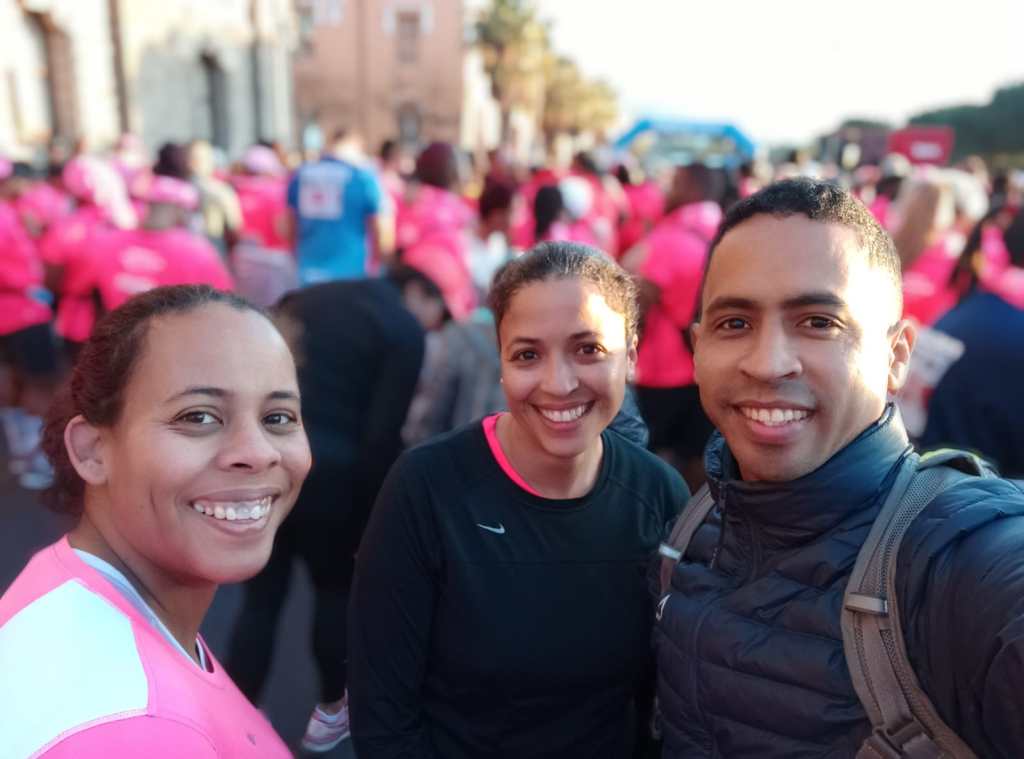
Starting to run again a few years ago
Allow yourself to be who you are. Respect the fact that having 30 years of knowledge of yourself gives you a wisdom that you didn’t have at 18. So if you want to change careers, study again, start a sport, do ballet… why not?
Why spend more time going down the wrong path? No matter how far you are down the wrong path, you can always turn back. I read that quote when I was in High School, and I’ve tried to always live by it. For me, realising I’ve gone in the wrong direction, means that I have new knowledge, that I cannot ignore. Do I want to spend the rest of time going down the wrong path? Or do I want to turn around, and actually go down the right path? And spend the rest of time there? Isn’t that preferable?
My psychologist reminded me that I could live my life with regret that I didn’t make a change that was deeply needed, and I could continue to believe that I was too old to live the life of my dreams. Or… I could change paths.
Imagine you were driving along a road, to a friend’s birthday party, and when you’d been driving for 30 minutes you realised that you were going in the wrong direction. Would you continue along that path because hey, you’d been driving for 30 minutes, and now you would waste 30 minutes to go back and change directions? I’m sure any one of us would go back and change directions because you are not going the way of your destination.
Our lives are no different.
You can always start over. And even if that relates to something like a depressive episode, or difficult period of life. That’s why it’s called an episode – it’s not the whole series. It’s a period of life, meaning there could be a new period on its way.
Right now, what you are going through could feel like it’s never ending. But we have the ability to start over. To make it end. To start something new.
And even in the moments where we feel like we are trapped, and we are unable to live the life we want, for whatever reason, know that you are empowered to make that change. Sometimes it’s small, like choosing to consume uplifting content and not comparing yourself to social media lives. It could be something big like quitting your soul-sucking job.
Most importantly, we need to believe that we are empowered to do these things. Especially in the moments when we feel like we are not.
Only you are holding yourself back from starting over. Starting to be content. Starting a new job. Starting therapy. Starting a new hobby. Starting to study. Starting to be a you that is grateful and brave.
The other day my son told me that they can’t cry because they are not babies any more, and I leapt at the opportunity to tell him that it’s always ok to cry. If you are feeling hurt, or sad, or angry, or even happy. It’s always ok to cry. I went on to say that even I cry, and his dad cries. Everybody cries.
I’ve alluded to it before, how we are socialized differently, and how little boys are taught that it’s not ok to cry, or get hurt. And as men grow older, they are taught that it’s not ok to feel big emotions. No one wants to be accused of being hysterical (a word which has its origins in the anatomy of a woman – the Greek word for uterus). Historically, for a man to do anything like a woman is bad, don’t run like a girl, or throw like a girl, or cry like a girl.
But when it comes to mental health, the rate of suicide amongst men is double the rate it is amongst women, however, the rate of depression diagnosis amongst men is half the rate it is amongst women. Surely, there is something wrong here?
If so many men are in such despair that the only way they see out is to end their lives, why are there not more male diagnosis of depression, of feeling empty? If we could treat more men for depression, then we could reduce the rate of suicide amongst men.
But to do this, we need to change our view of mental health amongst men. Seeking help in the form of therapy or other methods of mental health treatment should not be seen as something only women do. Men need to know about the benefits of talk therapy, and share it with their friends. Men need to learn the symptoms of mental illness, so that they can recognize it in themselves, but also in their friends.
There was a great campaign in the UK on bar coasters, where it asked questions like, “are you feeling a lot more angrier than usual?”; “do you not enjoy the things you used to enjoy?”; “are you feeling like you don’t fit in with your friends?”. These are the type of questions men should be asking themselves.
Depression isn’t only about sadness, and feeling weak, and something that only women experience. Depression is also increased anger and irritation. Feeling nothing. Decreased motivation. Just feeling off. Feeling like you don’t want to be with your friends, or that something is just different when you’re with them.
We need to teach men that it’s ok to not be ok. That it’s ok to cry. That it’s ok to ask for help. And to seek professional help.
The societal expectations of men are to be the heroes, the ones who stay strong for their families. But struggling with a mental illness leaves you feeling weak. And unable to take care of yourself, let alone your family. And because they’ve been raised to not talk about these feelings, and these fears of not living up to these societal expectations, all of these feelings are repressed and turned inwards. They may come out as anger or irritation, or the utter despair that leads to suicide.
Men learn early on, that it’s not ok to be introspective, to journal to dissect your thoughts, so why would talk therapy work? Women spend hours talking to their friends to solve problems and to discuss their lives “ad nauseum”. But for men, when there is a problem, they are taught that they need to man up, and punch things and fight. But the fact is, you cannot punch your mental illness.
We need to challenge the toxic masculinity that says we need to mock our friends for seeing a therapist, or for expressing emotions. Because that is what is causing the underrepresentation of male mental illness. Men are not doing well, and don’t want to express it to anyone for fear of being judged, or accused of “acting like a woman”.
We need to raise our boys to teach them that it’s ok to cry, no matter what age they are. It’s ok to feel sad, but it’s also ok to feel lonely, to feel empty. But most importantly, we need to teach them that when life is too much, we should seek help, from our family, our friends, or professional help if that’s what we need.
Depression def.: a common and serious medical illness that negatively affects how you feel, the way you think, and how you act. Depression causes feelings of severe despondency and dejection.
Q: How would you define Depression? (in layman’s terms)
A: My definition of depression would be a constant state of hopelessness, where you want to do things, but you just can’t. You want to get up and be productive, but can’t. You want to be surrounded by people but can’t. Because you don’t want to be a burden, but you can’t help being a burden.
Q: What are the symptoms? (as you know or experience them)
A: Some symptoms I think are answers to questions, like how
many days have you not been getting enough sleep? How much energy do you have?
Does your work inspire you? Do your friends find you talking really slowly, or
really fast? How often do you feel hopeless? Have there been any changes in
feelings, appetite, or sex drive.
Q: How does it feel to have Depression?
A: For me it’s, you really want to do stuff, but you feel
that you can’t. It’s not that you don’t have the will power. Some days you just
can’t get out of bed. You want to and you shout to yourself in your head to not
be lazy, but your body just won’t get out of bed.
There is a disconnect between what you want to do, and what your body tells you that you can do. What you want to do, what you should do, and what you end up doing. You may look at a list of things you want to do, and you try to do some of them, but you just can’t. You just don’t have the motivation, or the physicality to actually do the things. And then that perpetuates the feeling hopelessness and worthlessness because of not doing things, and that you are not good at anything, and it all just gets worse.
And I don’t know why, and it’s not something I want, but I
just create a situation where I have things that I want to do, but I just
don’t.
For me, I don’t know about it being about being sad. People
may view depression as not outgoing or engaging with friends. It’s not sad,
it’s a purple haze, and it’s just not good. You could get a call from someone
who you really love taking to, but then not want to talk to them so you don’t
answer the phone, or you do speak to them, and you just don’t enjoy it, even
though you normally enjoy talking to them.
It’s like having an overwhelming sense of misery. It can be
sad, but we generally have reasons to be sad. But there isn’t always a reason
for feeling depressed. It’s a constant state of being hopeless, overwhelmed,
and a disconnect between what you want to do, and what you do do. It’s about
knowing that this isn’t normal for me.
I think that it’s important to be honest with yourself and
those around you, and put your hand up and say, “I’m not feeling great”.
Q: What are the treatment options for Depression?
A: I think there is obviously the quite clinical way, through
Cognitive Behavioural Therapy (CBT), to reflect with someone else. CBT enables
you to be guided through exactly what are the symptoms you are experiencing,
and then breaking them down into tasks to address them. To be actioning against
the symptoms, which could help alleviate the symptoms. This method is whereby
you have an impartial person work through the changes with you. Once you work through
it with someone it can be challenging, but I think when you really unpack every
step, it has a meaningful impact. It can really benefit you.
Every concern and problem are really overwhelming, but when
you pick out simple things to resolve the big and vague emotions you may be
feeling, you can focus on these, and then work through them methodically.
Less clinical, is surrounding yourself with friends and family.
Make sure you have other people you can confide in. Sometimes, all you need is
to share how you are feeling with someone, and you don’t have to be in a
formalized therapy situation.
If you have a chemical deficit, or if CBT doesn’t address
the core issues, you will need to use medication. For example, if your body is
not producing serotonin, SSRIs, might absolutely be something that your body
needs. Even with medication though, you need to make sure you’re eating well,
drinking well, and exercising, otherwise, you’re not giving yourself a fighting
chance.
It’s like with any illness, the medication alone will not
resolve the problem, if you do not adjust your lifestyle too. If you had heart
disease, you would be on medication, but you’d also need to adjust your eating
and drinking habits, to remain healthy. Healing mental illness is the same.
So don’t live in darkness, not eat, or move. Make sure you
have a nice place to live and a nice way to live. With good people who support
you.
Image source: lifetomake.com
Q: Do you have to take medication if you have Depression?
A: You don’t have to. You might not have to. But you might have
to. And someone that’s a trained professional who understands the cause, might
say that you need meds. You need to be open to the idea. It’s not a sign of
weakness. If you had a vitamin deficiency your doctor would definitely
recommend vitamins. No one judges that. If you look at your brain, and if it’s
not producing properly, then you’ll need to go the medication route.
We need to accept that your brain is an organ just like the
rest of your body. If you had a thyroid problem, it’s a medical issue. Your brain
needs attention, just like the rest of your body.
If medication is needed, embrace it, if not then don’t worry
about it. Work with a professional. It might be meds that are required, but it
might be only therapy that you need.
If you do need meds, don’t just take it, and that’s it, you
need to adjust your lifestyle too and make sure you’re in a supportive environment.
You may need a combination of therapy and medication. You definitely need other
support mechanisms.
And know that you might go through multiple regimes of
medication. You might have to go through many brands and dosages. It might take
months before your body produces what it needs to work. It might not work at
all. It might be a year before you start feeling better. You might even be
diagnosed with treatment-resistant depression.
I still want to emphasise that, above all, it’s normal. And
it’s not fine, but normal, and you’ll need to explore which options work for
you. Not everyone needs medication, but if you do need medication, embrace it,
and keep trying.
It can be an agonizing, long journey, but make sure you’re
on the journey.
Q: Is it genetic?
A: For me, I think it’s a combination of your environment,
genetic factors, or it could just be an accident.
If I look at my family, it’s most likely genetic. A number
of my close family members suffer with some form of mental illness. So if I had
to look at it surgically, at my family tree pattern, I would say, yes it’s
genetic, but some families have no challenges at all, and a person in that
family could still have depression.
A lot of mental illnesses, are a product of environment, like
anxiety. Our society is changing, and it has been shown that 25% of girls
before the age of 14 have an anxiety disorder. And while young people today are
more open about mental illness, this is still not a stat we have seen before. It’s
because of the social pressures on social media. We’re in a hyperattentive
world. Where the number of followers you have, and the number of likes on a
post are important, and it’s resulting in a world focused on instant
gratification through visuals, and having the perfect social media life. The
success metric in our personal lives is around exposure. We are forced into a
mould, to be a certain type of person. And none of it is 100% true. So
definitely the environment we live in.
But also, it is as a result of the challenges we experience in our lives. Instances of mental illness, like depression, also occur in relation to the number of wars, colonization etc a society experiences, all problems forced on people by others. PTSD has been known about for thousands of years, in that, during the Crusades, soldiers would still hear clashing of metal long after leaving the environment they were fighting in. This shows that mental health has been documented for thousands of years, in written records. It’s always been a problem, but we’ve never looked at in the right way. Younger people are talking about mental health more these days, we are starting to see more mental health memes. The world is starting to have a more casual relationship with mental health. Children as young as 14 years are talking about it. Sometimes younger.
Overall, mental illness is both genetic, and environmental.
For example, you might get cancer even if you don’t smoke or
drink. It could be that it is genetic, but we cannot be sure what the exact
cause is.
The brain is complex. Don’t try and put it in a box.
Q: Anything else you would like to add
A: I heard my cousin’s kid of 7 years, tell her mom, “it’s
not good for my mental health” and I just think that she has had exposure at
such a young age to have the language to express that her mental health is
important. Overexposure of stress is not good, and young children are
acknowledging this.
We are on the cusp in history where the generation before us
denied mental health, and our generation is starting to talk about mental
health, and being open about it, and I’m sure the next generation will have
normalized it.
Young kids are talking about stress and mental health. We
are starting to talk about it in legislative, medical, social society. We are
changing the landscape in the ways in which we talk about mental health.
What is important is empowering the frontline, those who are
the first people who are going to be managing the symptoms of a mental illness.
For them to be able to recognize it as mental illness, and then treat it as
such. We need to empower them in the knowledge of the right action to take.
We’re starting to see a lot more openness around mental
health, even in societies where it was previously a taboo.
It doesn’t matter who you are, your age, or upbringing – anyone can suffer unique mental health
challenges. From all walks of life. It’s not a failure. There are treatments,
and there are things you can do to improve your life.
If you want to, you can change the world. We are ready.
We’ve never been more ready. It’s a really beautiful time to talk about mental
health.
Just talk. If you’re not having a good day, say so. Just
talk.
If you’ve had a bad weekend, don’t lie. Don’t think of a
different things to say, to make up a story of a good weekend. Just say how it really
is. You’ll negatively impact yourself if you are not honest about your mental
health.
Talk about it. Write a blog. Whatever it might be. You’re
going to change someone’s’ life. And they’ll change your life. There’s a ripple
effect of mental healing.
Be the young girl saying that she doesn’t want to do
homework because she’s stressed
Or the 80 year old who is admitting that she is not doing
well mentally.
Or members of the LGBQTIA community, and all the mental
health issues they struggle with.
Women are more likely
than men to get depressed – One of the reasons is due to the different
challenges women experience. But also because men don’t seek mental help.
People in the developing world, where there is no access to
treatment. People are exposed to mental health issues but what they see is violence
or they are violent. But because they are not treating the illness, there is a
vicious cycle of violence and illness and homelessness. In the developed world
they have access, and no one knows they have mental health issues.
Look at it as what it is. It’s who we are and what we are
and how we talk will create the perception of what mental illness and mental
wellness is.
We’ll see the mindset change that we want to see. In 30
years we’ll live in a beautiful world. But until then we have to talk.
Resources available to you, if you are struggling with Depression:
(From the perspective
of someone with Depression and Anxiety)
Dear Loved One/Carer,
I’m hoping this letter can help you understand what I go
through daily.
Some days are good days. And on these days, I’m able to get
out of bed, go to the gym, socialize. Do all the things. I don’ t know when
these days will happen or how long they’ll be around.
Then there are the bad days. When I sometimes can’t get out
of bed. I am unable to wash my hair, or have the energy to brush my teeth even.
On these days, the list of things is sometimes longer. Anxiety tells me to do
all the things. I have 5 different lists running through my mind. My rational
mind knows I’m setting myself up for failure. But anxiety says it must be done,
so I write lists. Depression on these days, tells me that I cannot do anything
on that list. I have no energy. I’ll never get it done. It’s all impossible.
What is the point of living? To do the things anxiety says. To what end
depression says. So nothing gets done. I’m overwhelmed and in despair. And
depleted and exhausted from doing nothing.
And if you find this hard, and confusing, imagine what it’s
like not knowing how you’ll wake up in the morning. Sometimes, I go to bed with
energy, planning out my day, setting up my gym clothes. Only to wake up,
physically unable to get out of bed. That is depression.
Or I plan to run before my gym class. Because anxiety tells me that I
have to do everything and be good at everything and lose weight and everything.
And then I wake up late and I hate myself because all I got to do was the class.
Anxiety has told me that I’ve failed.
What I need on the bad days is for you to sit with me. Not
fix me, not solve the problems caused by anxiety and depression. Just be there.
Just listen if I want to talk, or hold me if I need to cry.
On the good days, we can do all the things around the house,
the grocery shopping, everything. All of the things. I have the energy and
capacity on the good days.
Sometimes we’ll plan like tomorrow is a good day, but it
doesn’t turn out that way. Then, we need to change our plans. Like if you plan
to do the washing and you wake up and it’s raining. Change your plans. Not
never do washing again.
Most importantly, I need you to try and understand my
diagnosis. I can help you, but I need you to be open to hearing me talk about
it. Sometimes sharing links to blogs, or websites that articulate how I am
feeling is easier for me, and also it helps to normalize what I’m going through
so that you understand my illness as an illness. I might not be ready to share
everything directly related to me and my particular experience, but it’ll come,
as I learn to trust.
Also important though, is that this is not only about me. You are you, with your own needs. Do not be afraid to express these. No relationship is going to function without both people sharing their needs, and having their needs met.
I know it’s hard living with me. Trust me, it’s hard for me
to live with me too.
For both of us, it’s important that we support each other on this journey. It may be my recovery journey, but as I grow and change, you’ll be there along the way. As I learn about boundaries, we may test each other, but this is part of relationship building. The more I understand myself, and where I start and my diagnosis ends, the better I can help you understand the same.
I want you to know that I love you, and I appreciate you, even though it doesn’t always seem like it. Thank you for still being in my life. And thank you for being on my journey of recovery with me.
Love,
Your Loved One, who suffers
with mental illness
* * *
Practical steps – Adapted
from “The Depression Project”
We need people to sit and listen to us without judgement or
criticism. You may have thoughts and opinions on what we’re going through, it
may seem irrational to you, the solution may seem obvious. Trust me, it’s
probably obvious to our rational minds too. But our rational minds are clouded
by our illness. Help us centre, and clarify our thoughts, help us rationalize what
we are going through, guide our thinking. Do not tell us we are irrational, or
that we aren’t feeling what we say we’re feeling.
Check in with us, if we would like to do something. It is
sometimes positive for us to go out for a walk, go for coffee, the movies.
Something that will recharge us. And also it will help to get out of the space
that we are in, the space that is causing difficulty.
Sometimes we are feeling too weighed down to do anything, maybe
we would like something to comfort us. Maybe we just need a hug, something to
drink or eat. In these situations, sometimes the smallest act of kindness can
do the world of good.
If we are in a really dark space, and none of these are working, ask if we want you to sit with us, or if we want to be alone. If we want you to sit with us, that’s all we actually need. Just be there. It’ll help us to not feel alone, even though we are not ready to talk about anything. If we need you to leave, it’s not about you, we need the space to recharge, and deal with what is going on at this point in time.
* * *
Being related to someone with mental illness, or being in a
friendship or relationship with someone who suffers with mental illness, can be
really hard. It’s confusing, and you never know what to expect. What we need
though is for you to be there, even in those difficult moments. Know that we
are trying, and that we need your support and empathy. And most of all, and I cannot
say this enough, is that we appreciate your presence in our lives, even though
we don’t always have the words, or means to say so.
So one thing that I’ve learnt in the past two years that I’ve spent on my healing journey, is the importance of holistic treatment. I used to be scared of medication because I was fearful of it fundamentally changing who I am. I believed in talk therapy, because I felt that my problems weren’t that big. I didn’t realise how seriously my anxiety was impacting my marriage because I didn’t realise how ingrained it was with who I am. And also, I thought things like moms groups were lame, and also I don’t like interacting with “moms”, where all we have in common is the fact that we are moms. And worst of all, I thought clinics were like a scene out of “Girl, Interrupted”, and when you talk about your stay in one, you should always whisper the word “clinic”, out of shame.
And then, these humans found their way into my life. And my
head. And they have all shaped my journey to recovery in important and valuable
ways.
DISCLAIMER: I realise
that I am quite privileged in that I have access to all these healthcare
professionals, but if you can get holistic treatment, it is so important and
helpful to your overall journey. But what is most important is getting the help
you need.
The woman who saved
my life
My Therapist. About two years ago, my son was born with two
holes in his heart, and then I was retrenched, and lucky enough to find another
job, but still I felt like I needed support. I happened upon a Facebook ad for
a moms group, and when that fell apart, I contacted the facilitator to see if
she would see me individually. She unfortunately couldn’t see me until
December, and I felt like I needed to see someone before then. So she suggested
a colleague of hers, and the rest, as they say, is history.
I remember sitting down in that first session and saying to
my therapist, that I’m here for what she called “champagne problems” on her
blog. Those things that make us feel bad, but aren’t quite clinical. We started
with me sharing what led me to therapy: a complicated pregnancy, a son with a
heart condition, a retrenchment. In our next session we went through my
history: family structure, childhood, issues I deal with.
We had an immediate rapport, we were able to joke, while
talking about serious things. We have a shared love of books and words. And she
understood me. For the first time I felt like someone was seeing me. I felt
validated.
We are still working through my stuff, because it turned out
that it wasn’t just “champagne problems”, and the fact that I thought that they
were speaks to all the stuff that I have to work through.
The woman who saved
my mind
After seeing my therapist for a few months, she suggested
that I see a psychiatrist for medication to help with my anxiety. I was a bit
nervous to go the medication route, I really believed that all I needed was
talk therapy. I didn’t want to mess with my brain chemicals. What if the person
I’ve always been changes?
The truth about medication, from my experience, is that it
lifts the fog of depression, and slows down those train tracks of anxiety for
example. It gives me the space to actually work through all the stuff from talk
therapy. It helps me to have a better handle on my day-to-day functioning.
My psychiatrist is great, and she is particularly skilled
with managing women’s issues. Also, when I started with her, I was still
breastfeeding, so she prescribed medication that I could take while
breastfeeding.
I’ve been through a couple of brands, and a mix of dosages,
but I think we’ve found something that suits me for the time being. Every time
we up my dosage or change brands, I have to try it out for a month and then go
back to her to check in if it’s working. If it’s not, then I need to try
something else. I’ve had some bad medication experiences, but in the end, I’m
supportive of the medication route, if it’s necessary.
It doesn’t change who you fundamentally are. And also, being
that I’m in this process would it so bad if the person I’ve always been
changes?
The woman who saved
my marriage
Having two kids really changes a marriage. Having two under
two is like a wrecking ball to a marriage. And our marriage was already under
strain due to my husband working shifts. From my side, I felt depleted, and
distant from my husband. I felt like he took me for granted and completely disrespected
me.
We had been in marriage counselling in our first year of
marriage, and she had helped us navigate our marriage, and the changes it
brought to our lives. I didn’t want to go back to her because I felt like she
favoured my husband, and with my whole self-renewal process that I was
undergoing, I couldn’t be in a room where I didn’t feel as heard as he was.
So we tried out someone else. We saw him for 3 months. And while he was well-revered, with many years of experience, I felt like he didn’t change anything in our marriage. I also felt as though he preferred my husband to me.
And that is when my therapist suggested the psychologist
that my husband and I are currently seeing. She is helping us communicate
properly. She’s teaching us about communication styles, and how our emotions
work at a neurological level. We’ve learnt what is hampering our communication
with each other. And she gives us homework to make sure that we practice what
we discuss, and that this process is dynamic and not held in the room with her
only.
The women who help me
re-parent myself
Parenting is not easy, no matter if you have one kid or
many. Girls or boys. Babies or adult children. Parenting is hard. And
confusing. And you never feel like you’re doing anything right. One day your
kid is eating carrots. The next day she hates them. Parenting is hard.
My therapist introduced me to “Mindful Mamas”, which is a group facilitated by a therapist, and through which we are guided through healing stories. We are also taught about the Conscious Parenting movement, which we can then try and apply in our lives.
The main tenets which I have gauged from this process is to
treat my children like tiny humans, with their own thoughts and emotions.
Discipline is no longer about getting them to do what I believe is right, but
rather guiding them through life.
I have learned to review my own agenda, and what it is that
I want out of the situation, and how it is perceived by them, and what they
want out of a situation. All kids want to do is enjoy life, and play. And this
is valuable for anyone. I have learnt so much from them about mindfulness. Yes,
we need to get done and go to work and school.
But is it really going to harm us if we sit for a few minutes to build a
lego house? And in reality, it’s not. In fact, it heals us more than it harms
us.
I still struggle through parenting, but, as a conscious
parent in training, I feel like I’m building valuable connections with my
children, and validating them, by seeing them for where they are. And hopefully
through all of this, I am building a secure attachment, and building confident
children, with a healthy sense of self.
Special
Acknowledgements
Friendamily
My friends. Who are always by my side. The people who will
stand up for me when the world is against me. But will also stand up against me
to steer me in the right direction.
Cuckoos
I recently spent a few weeks in a psychiatric clinic. And I
met a group of awesome people. We spent many nights giggling and talking. For
the first time a group of people just got me, and could support me in ways I
have never been supported before. They held me together when I was falling
apart. And they are part of my journey to recovery.
Liefie
(actually that’s his nickname for me) I’ve mentioned him
before. And about how our marriage was falling apart. But he has truly been so
supportive. When things were really bad, and he was scared out of his mind, he
was able to give me the space to heal. And then opened himself up to learning
about me and my struggles, and what I need from my partner. He finally read all
those blog posts I shared with him.
Wildlings
My kids. They are lively and energetic. And mothering is
draining sometimes (most times). But when I walk in that door, and they run
towards me shouting “Mommy!” all is forgotten. And on the bad days, all I need
is a hug from them, to get perspective. And to remember two of the reasons I’m
living for.
So there it is, your support can come from the strangest of places. And if you are in a dark place, you may not realise that you have anyone at all. A lot of the time, despite having all of these people in my life, I feel really lonely, and like I have no one. But that is part of my journey. Learning to lean on those around me for support, and about boundaries and who to trust.
But if there is no one that you do find comfort in, I hope you find comfort in this blog, to know that there is this quirky chick, with some issues, who wants to be there for you.
From Left to Right: Positive affirmation; medication; hydration; relaxation; more medication
As I’ve mentioned before, I am a mother of two. What I did
not mention is that I’m a mother of two children, under 4, who are 20 months
apart. That is enough to make anyone go a little crazy. And then to top it off,
my second pregnancy was complicated, and then my son had heart complications,
and then the cherry on top was me getting retrenched while on maternity leave,
on the anniversary of my father-in-law’s death. More on that in a later post.
And did I mention that I had been suffering, undiagnosed, for at least the last 30 years? I started on the road to recovery roughly 2 years ago, so I thought I’d start with a post on mental health.
Words of Affirmation
Now, here, I’m not talking about
platitudes, or those messages you leave on your mirror to motivate you as you
start your day. What I’m talking about are those words that speak deep into
your soul. For all my life, I have struggled with issues of inadequacy and
feelings of not being good enough. I need to remember that I am capable, and
that I do not need to hold myself to anyone’s standards but my own. And also to
remember why I started. My word of affirmation is tattooed on my arm, “Powerful
beyond measure”, from the Marianne Williamson poem:
“Our deepest fear is not that we are inadequate. Our deepest fear is that we are powerful beyond measure. It is our light, not our darkness, that most frightens us. Your playing small does not serve the world. There is nothing enlightened about shrinking so that other people won’t feel insecure around you. We are all meant to shine as children do. It’s not just in some of us; it is in everyone. And as we let our own lights shine, we unconsciously give other people permission to do the same. As we are liberated from our own fear, our presence automatically liberates others.” — Marianne Williamson
Self-care
Hydrate. Eat your vegetables. Get a
massage. Stay in bed all day. Get up and shower. Read. Watch a movie. Whatever
is healing for you. We need to find ways in which to look after ourselves, and there
is no one-size-fits-all.
Some days, self-care is about getting up and doing the things. And then other days, it’s staying in bed because facing the world is harmful. But the most important thing is that we take time out to look after ourselves. And heal. Whatever that looks like.
Be Mindful
What was your left hand doing while your
right hand was brushing your teeth this morning? Not many of us can answer
this. Because we are very rarely living in the moment. By the time we start
getting ready for work in the mornings, we are already prepping for our 9am
meeting in our heads. Mindfulness is something I am trying to practice,
particularly with my kids. To be honest, I’m learning from them to live in the moment, while I try to parent consciously
(also something I will chat about in a later post).
Something helpful that I was recently
guided through, was paying attention to your body when you feel an emotion.
Even if it’s a positive emotion, it just means that we are being more present.
Once we can acknowledge our thoughts, our emotions and our physical reactions,
we can start thinking about how to react, and what we need to do before we feel
overwhelmed by the emotion.
I’ve got a squishy toy in my desk drawer,
for when I feel tension, or stress, or the need to emotionally eat. And it
helps me release the anger, or stress in a different way, if I’m not able to
take a walk, or scream or exercise. All methods I use to manage difficult
emotions.
In the moment, when you start feeling
overwhelmed, try a grounding exercise. Look for 5 things you can see, 4 things
you can hear, 3 things you can touch, 2 things you can smell and 1 thing you
can taste. What a grounding exercise helps you to do is to be take the focus
off the emotion and focus outside of yourself.
And if you can, dance it out.
Medidate
Linked to mindfulness, is spending some
time in meditation. I struggle to sleep, and I started using a meditation app,
to meditate just before I went to sleep in the evenings. Just spending 5-10
minutes focusing on my breathing, did wonders for my insomnia. I managed to
fall asleep quite quickly, and I have also been managing to stay asleep throughout
the night.
What is also helpful, although I am the
first to admit that I haven’t been able to, is to try and get a meditation in,
in the morning, either before you get out of bed, or before you leave the
house. Whichever is more stress provoking. And also, before you go into the
office, spend 2 minutes in your care, focusing on your breathing.
I do a lot of meditation with my therapist, and in the mom’s group that I’m a part of, but outside of these, I have a meditation app. At the moment, I’m using Headspace, but there are plenty available in your app store. You can find one that works for you
Medicate
Sometimes, you just have to. (under the
guidance of a licensed medical professional of course)
I will admit that I was very hesitant when
my therapist first suggested using medication, but now that I’ve found the
right medication, at the right dosage, it’s changed my life. For me, the
medication, helps stabilize my mood so that I can face everyday life. And then
I see a therapist to help me deal with everything else. Medication can fix
today’s mood, but it cannot fix the past. How I see it, it brings my mood to a
functioning level, just like everybody else, so that I’m better positioned to
deal with life stressors. It doesn’t
mean I float about and never experience stress or anger, or sadness. It just
means that these very normal emotions don’t debilitate me, like before.
Some tips from my journey. While a GP and a
psychiatrist can both prescribe medication, my preference is a psychiatrist,
because it’s their area of specialty. And they will be able to assess why the
medication is not working, or maybe it is working and the real reason you’re
feeling down is PMS (it’s happened to me), or other such things. And also, if
you have a good one, they won’t just look at the diagnostic criteria, they will
look at you holistically, and consult with you on how you are feeling, what is
happening in your life etc etc. Generally because they spend their entire day
working with mental illness, I feel like they are more equipped for when you
bring your concerns to them.
Also, you may be wondering how it works.
And that is what most people worry about, is that taking psychiatric medicine
messes with your brain chemistry and who are you. So I am not equipped, to
explain it, and also I am not a qualified medical professional so cannot be
dispensing medical advice, or explanations. What I will explain here is how it
happens from the patient side.
Once you are diagnosed, your psychiatrist
will prescribe medication that she/he feels is right for you based on a variety
of factors. For example, when I started medication, I was still breastfeeding,
so that had to be taken into account. And that medication is the only
medication I am on, so I didn’t have to worry about interactions with other
medication. You will start taking your meds, but you won’t necessarily feel a
change for at least 4 weeks. Which is why you will need to go back and meet
with your psychiatrist. If it works – great, then you will stay on those meds for a
period, determined by your psychiatrist. And so it will go. Sometimes, you’ll
be fine for months, and then it won’t work, or something will happen and you
need to adjust your meds, but your psychiatrist will keep a close eye on you,
and also, if you do feel changes that are concerning, contact your doctor. On
one type of meds that I was on, I felt numb, which is kind of a feeling I was
struggling with, as part of depression, so that was defs not working for me.
And a final note on treatment, I am currently seeing both a psychologist and a psychiatrist, for an holistic treatment. Together they deal with all my stuff both inside and out. Like I said before, medication helps stabilize your mood to “normal” levels, and then a psychologist will help you with other factors which lead to you seeking help.
Talk
You may be one of those lucky people with a
large support group, but if you are not, there is a host of therapists out
there. You may need to search for a while to find one that you have rapport
with. I went through 3 before I found The One. Also, if you are lucky enough to
have friends and family who are good at dispensing advice and providing support,
that’s great, but sometimes professional help is what you really need,
particularly if there is trauma or mental illness involved.
One last note on my starter kit, my disclaimer on the above
is that I am by no means a mental health professional, these have been my
experiences, and you may have completely different experiences. What I will
urge you to do though, is if you are feeling big emotions, that are
overwhelming, or are causing you to not be able to manage your everyday life,
seek help. You do not need to suffer alone.
I was born Leila (pronounced LIE-LAH) Gardner on the
Thursday the 12th of April 1984, by Caesar, on a date chosen by my
mother, so that I wasn’t born on Friday the 13th. And while it may
sound like an overshare, there is a lot to be said of your birth experience and
how it impacts the rest of your life. If you believe in the weird sciences. And
I tend to flip flop between the weird sciences and the actual sciences. Just
like my name is spelt like LAY-LAH, and pronounced like LIE-LAH.
Just like my name, I am complicated. And generally don’t fit
into the boxes. I can be a lot for some people. And it’s taken me 30 some years
to realise that that’s ok. I hope you’re all still reading, because I’m just
getting started.
To describe myself, in one word, I would say: quirky. And I
hope that this blog will give you some insight into my quirky world.
A world which I inhabit with my husband and two kids. My
birth family is spread around the world, but I have a big family of inlaws who
mostly live within 5kms of me. We like each other at least. And then there is
my friendamily, made up of people that share my brand of crazy.
By day, I am a marketing “professional”. And that’s all I’d
like to say about that.
By night, I’m everything else. I do a little ballet because I enjoy dance and I wanted to do contemporary, but it clashed with my son’s swimming. Hashtag momlife. I do a bit of writing. Not this blog only, but I’m writing a screen play and a novel. The plans/outlines of which mock me every day as they are above my dressing table. And then I try and fit in some running and some swimming and other fitness type things.
I used to consider myself a triathlete, but now the only tri
sports I do are feeding my kids, bathing them and getting them ready for bed.
Also, I bring this up, because it’s a part of me, although I don’t allow it to define me is that I suffer with Anxiety, Depression and ADHD. And I hope I can share some insights of living with the triad of mental illness and my journey towards mental health. So while I am on this journey, of mental health, motherhood and other things, I hope I can share my life with you and maybe you’ll laugh, maybe you’ll cry, because you’re laughing so much. And maybe you’ll just think I’m weird but carry on reading anyway. But hopefully I’ll make you feel ok, and maybe I’ll inspire some of you. To do what, I dunno. But if you feel good then my work here is done.










 The Mispronunciation of Me